Sed ut perspiciatis unde omnis iste natus error sit voluptatem accusantium doloremque laudantium, totam rem aperiam, eaque ipsa quae ab illo inventore veritatis et quasi architecto beatae vitae dicta sunt explicabo. Nemo enim ipsam voluptatem quia voluptas sit aspernatur aut odit aut fugit, sed quia consequuntur magni dolores eos qui ratione voluptatem sequi nesciunt. Neque porro quisquam est, qui dolorem ipsum quia dolor sit amet, consectetur, adipisci velit, sed quia non numquam eius modi tempora incidunt ut labore et dolore magnam aliquam quaerat voluptatem.
The present question: to code or not to code
Most AI usage stalls at the copy-paste boundary. You prompt ChatGPT to draft a customer response, then manually paste it into your help desk. You ask Claude to analyze a sales report, then copy the insights into Slack. Each interaction delivers value, but the value stops at the edge of the chat interface.
The cost is small at first—a few minutes here, a quick copy-paste there. Then it compounds. Thirty to sixty minutes daily spent shuttling information between tools. Context lost at every handoff. Generic outputs because the AI never sees your CRM data, your knowledge base, or your brand guidelines. And when something breaks—a prompt that suddenly produces the wrong format, an API change that stops data flowing—you’re left guessing where the problem actually is.
How does AI integration work?
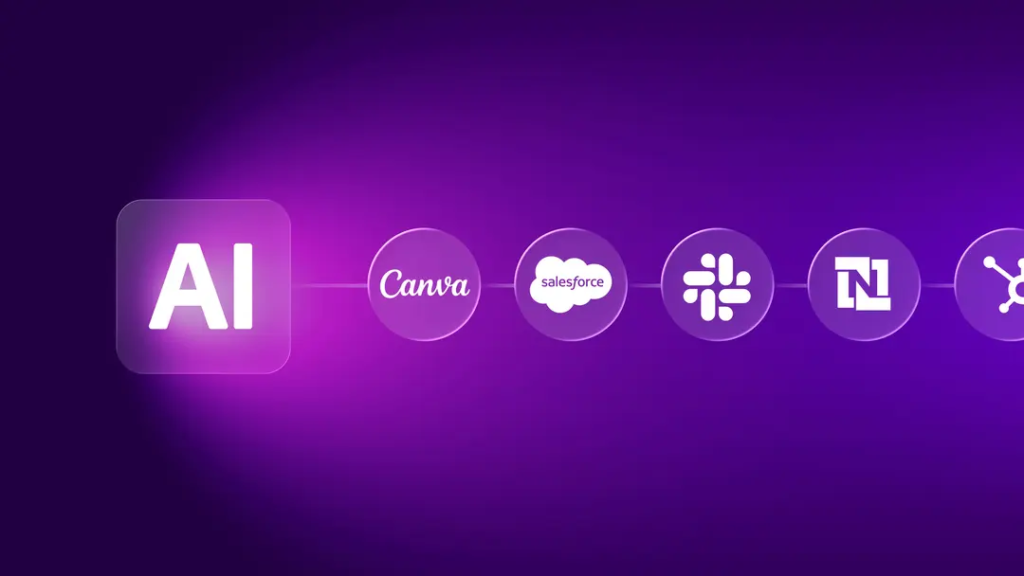
AI integration connects your AI models to your business systems using a repeatable, observable scenario. Instead of manually prompting an AI tool and copying results into your CRM or communication platform, integration automates the entire flow—triggering on real business events, routing data to the appropriate model, transforming outputs into structured formats, and writing results back to where they’re needed.
In Make, that scenario is a visual sequence of modules that pass data (bundles) through operations. The scenario handles each step with intent—where data enters, which model processes which task, how outputs are transformed, and where results land.
This approach solves four recurring problems. First, it eliminates manual prompting by triggering scenarios on real business events—a new support ticket, an updated CRM record, a file added to a shared folder. Second, it ensures the right data reaches the right model by filtering, sanitizing, and enriching inputs before AI processing. Third, it transforms AI outputs into formats your downstream systems actually understand—structured, validated, and mapped to specific fields. Fourth, it maintains observability throughout, letting you track parameters, inputs, and outputs at the module level so you can improve prompts, swap models, and fix issues without starting over.